IRI คืออะไร? ค่า International Roughness Index ดัชนีวัดความเรียบถนนWhat is IRI? International Roughness Index — Road Roughness Measurement Standard
อ่าน 5 นาที5 min read
Asia Testing Equipment
IRI (International Roughness Index) คือ ดัชนีมาตรฐานสากลที่ใช้วัดความเรียบของผิวถนน พัฒนาโดย World Bank วัดในหน่วย m/km (เมตร/กิโลเมตร) ยิ่งค่า IRI ต่ำ แสดงว่าถนนเรียบดี ใช้เป็นเกณฑ์ประเมินคุณภาพทางโดยกรมทางหลวงและหน่วยงานด้านถนนทั่วโลกIRI (International Roughness Index) is an international standard index for measuring road surface roughness, developed by the World Bank. Measured in m/km (metres per kilometre), a lower IRI value means a smoother road. It is used by highway departments worldwide as the benchmark for road quality assessment.
m/km
หน่วยวัด IRIIRI measurement unit
World Bank
มาตรฐานสากลInternational standard
ASTM E950
มาตรฐานเครื่องวัดEquipment standard
IRI คำนวณอย่างไร?How is IRI Calculated?
ค่า IRI คำนวณจากกระบวนการทางคณิตศาสตร์ที่เรียกว่า การจำลองด้วยรถยนต์สี่ส่วน (Quarter-Car Model) โดยจำลองล้อเดียวที่มีระบบสปริงและระบบกันสะเทือนวิ่งบนโปรไฟล์ถนนที่ความเร็ว 80 กม./ชม. แล้วประมวลผลการตอบสนองของมวลเทียบกับระยะทางIRI is calculated using the Quarter-Car Model, simulating a single wheel with spring and damper systems traveling over the road profile at 80 km/h. The model measures the cumulative suspension stroke relative to the distance traveled.
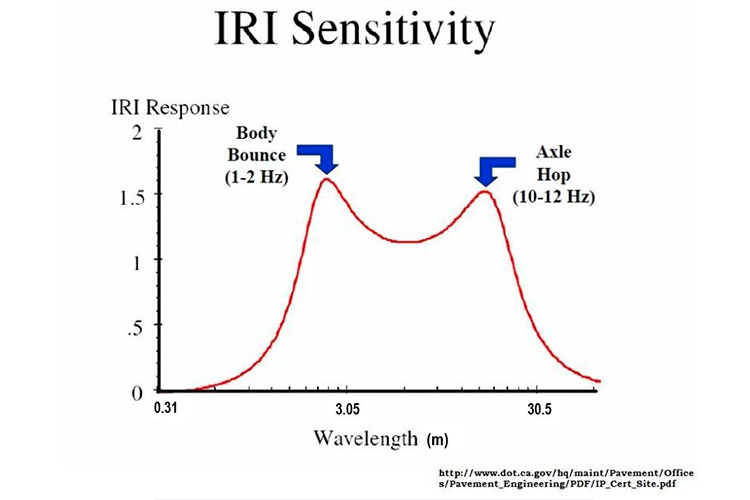
ความถี่ที่ส่งผลต่อค่า IRI มีสองช่วงหลัก คือ 1–2 Hz (Body Bounce — แอมพลิจูด ≈ 15.24 ม.) และ 10–12 Hz (Axle Hop — แอมพลิจูด ≈ 2.13 ม.) ก่อนคำนวณจะมีการใช้ตัวกรองค่าเฉลี่ยเคลื่อนที่ 250 มม. กับข้อมูลโปรไฟล์Two key frequency ranges affect IRI: 1–2 Hz (Body Bounce, amplitude ≈ 15.24 m) and 10–12 Hz (Axle Hop, amplitude ≈ 2.13 m). A 250 mm moving average filter is applied to the profile data before calculation.
IRI Sensitivity Chart แสดงความถี่ที่ส่งผลต่อค่า IRI — Body Bounce (1–2 Hz) และ Axle Hop (10–12 Hz)IRI Sensitivity Chart showing frequency response — Body Bounce (1–2 Hz) and Axle Hop (10–12 Hz)
การจำแนกประเภทผิวทางตามค่า IRIRoad Surface Classification by IRI
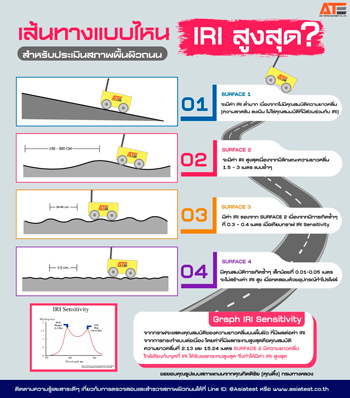
มาตรฐาน World Bank แบ่งผิวทางตามค่า IRI ออกเป็น 4 กลุ่ม (Surface Class) โดยยิ่งตัวเลขต่ำ Surface Class ยิ่งดีThe World Bank standard classifies road surfaces into 4 groups (Surface Class). A lower class number indicates better road quality.
Surface Class
ความเรียบRoughness Level
ลักษณะDescription
Surface 1
ต่ำ (ดีที่สุด)Low (Best)
ถนนใหม่ เรียบมากNew road, very smooth
Surface 4
ปานกลางMedium
ถนนใช้งานทั่วไปGeneral use road
Surface 3
รองลงมาModerately rough
ถนนเสื่อมสภาพDeteriorated road
Surface 2
สูง (แย่ที่สุด)High (Worst)
ถนนขรุขระมาก ต้องซ่อมVery rough, needs repair
เกณฑ์มาตรฐาน IRI ของกรมทางหลวงไทยIRI Standards — Thailand Department of Highways
กรมทางหลวงไทยใช้ค่า IRI เป็นเกณฑ์ประเมินสภาพถนน โดยมีมาตรฐานดังนี้Thailand's Department of Highways uses IRI values as the road condition assessment standard:
IRI (m/km)
สภาพความเรียบCondition
การดำเนินการAction
1.0 – 2.5
ดีมากExcellent
ไม่ต้องซ่อมNo action needed
2.5 – 3.5
ดีGood
บำรุงรักษาปกติRoutine maintenance
3.5 – 4.5
พอใช้Fair
วางแผนซ่อมPlan for repair
> 4.5
ต้องปรับปรุงPoor
ซ่อมด่วนUrgent repair
ที่มา: กรมทางหลวง, สำนักวิเคราะห์และตรวจสอบSource: Department of Highways, Analysis and Inspection Bureau
เครื่องมือวัด IRI มีอะไรบ้าง?IRI Measurement Equipment
Walking Profiler — เครื่องวัดความเรียบแบบรถเข็น บันทึกข้อมูลทุก 25.4 มม. ตามมาตรฐาน ASTM E950 เหมาะสำหรับงานสำรวจจุดเฉพาะWalking Profiler — hand-pushed road profiler, records data every 25.4 mm per ASTM E950, ideal for spot surveys
Inertial Profiler — ติดกับรถยนต์ สำรวจที่ความเร็วสูง เหมาะสำหรับสำรวจถนนยาวและโครงข่ายหลักInertial Profiler — vehicle-mounted, high-speed survey, ideal for long roads and primary road networks
IRI หรือ International Roughness Index คือดัชนีมาตรฐานสากลที่ใช้วัดความเรียบของผิวถนน คิดค้นโดย World Bank วัดในหน่วย m/km ยิ่งค่า IRI ต่ำยิ่งหมายความว่าถนนเรียบดีIRI (International Roughness Index) is an international standard index for measuring road roughness, developed by the World Bank. It is measured in m/km — a lower value means a smoother road.
ค่า IRI มาตรฐานของกรมทางหลวงไทยเท่าไหร่?What is Thailand's IRI standard?
กรมทางหลวงกำหนดค่า IRI ดีมากที่ 1.0–2.5 m/km, ดีที่ 2.5–3.5 m/km, พอใช้ที่ 3.5–4.5 m/km และต้องปรับปรุงหาก IRI เกิน 4.5 m/kmThailand's Department of Highways rates 1.0–2.5 m/km as Excellent, 2.5–3.5 as Good, 3.5–4.5 as Fair, and above 4.5 as Poor (needs repair).
เครื่องวัด IRI มีกี่แบบ?What types of IRI measurement equipment exist?
มีหลักๆ 3 แบบ คือ Walking Profiler (รถเข็น ตาม ASTM E950), Inertial Profiler (ติดรถ ความเร็วสูง) และ RTRRM (วัดการตอบสนองของระบบกันสะเทือน) แต่ละแบบมีมาตรฐานและข้อกำหนดต่างกันThree main types: Walking Profiler (per ASTM E950), Inertial Profiler (vehicle-mounted, high-speed), and RTRRM (suspension response measurement). Each type follows different standards and specifications.
Walking Profiler ตามมาตรฐาน ASTM E950 คืออะไร?What is Walking Profiler per ASTM E950?
Walking Profiler คือเครื่องวัดความเรียบถนนแบบรถเข็น บันทึกข้อมูลทุก 25.4 มม. ตามมาตรฐาน ASTM E950 และ World Bank Standard Class 1 แล้วคำนวณออกเป็นค่า IRI เหมาะสำหรับงานสำรวจสนามบิน ถนนในโครงการ และงาน QC ก่อสร้างA Walking Profiler is a hand-pushed road roughness measuring device that records data every 25.4 mm per ASTM E950 and World Bank Standard Class 1, then calculates IRI values. Suitable for airport runways, project roads, and construction QC.
สนใจเครื่องวัดความเรียบถนน Walking Profiler?Interested in Walking Profiler Equipment?
ATE จัดจำหน่ายเครื่องวัด IRI ตามมาตรฐาน ASTM E950 พร้อมอบรมการใช้งาน ตอบกลับใน 1 วันทำการATE supplies IRI measurement equipment per ASTM E950 standard, with training support. Response within 1 business day.

.png)